
Torch Down Roof Denver
Roofing Contractor Specializing in Roof Repair and Storm Damage Roofing in Denver
Providing roof repair, emergency roof repair, storm damage roofing, and roof replacement services throughout the Metro Denver Area
Family-Owned Legacy Built on Quality Since 1978
Fast scheduling and quick response – reach out today
Request Estimate
Ernies Roofing
Torch Down Roof Denver, CO
Torch Down Roof Denver, CO Flat Roof Protection
Torch down roofing is one of the most dependable flat roof systems for Denver homes, garages, additions, porches, patios, and commercial buildings when it is installed the right way. If this is your first time hearing this, torch down roofing is a rolled modified bitumen roof system that is heat applied to create a sealed, water resistant surface over low slope roof areas.
Denver flat roofs take a beating from hail, sun, snow, freeze cycles, and sudden temperature swings. A flat roof does not shed water like a steep shingle roof, so the details matter. Seams, edges, drains, flashing, wall tie ins, and roof penetrations all have to be handled correctly. One sloppy seam can become a ceiling stain, a soaked deck, or a repair bill that grows teeth.
Featured Answer
A torch down roof is a heat applied modified bitumen roofing system used on flat and low slope roofs in Denver. It works best when seams, flashing, edges, drains, and roof penetrations are installed by an experienced roofing contractor who understands Colorado weather.
Ernie’s Roofing has served Denver since 1978. We are a family roofing contractor, and we look at torch down roofing the same way we look at any roof system: it has to protect the structure first. Pretty does not matter if water gets under it. Cheap does not matter if it fails during the next hail storm. And fast does not matter if the roof needs to be torn apart again next season.
Torch down roofing is not a place for guesswork. It involves heat, rolled membrane, roof prep, seam work, flashing details, and safe installation practices. Done right, it can give flat and low slope areas strong protection. Done wrong, it can trap moisture, split at seams, blister, pond water, or leak around walls and edges. That is why homeowners and business owners in Denver need a contractor who understands both roofing and local weather.

What A Torch Down Roof Does
A torch down roof is designed for roofs that do not have enough slope for standard asphalt shingles. Shingles need pitch. When they are placed on a roof that is too flat, wind driven rain and melting snow can work underneath them. A torch down system is made to create a sealed surface that handles slow drainage better than shingles.
The system uses modified bitumen membrane. Bitumen is asphalt based roofing material. Modified means it has been strengthened with added materials so it can handle movement, heat, cold, and weather better than old fashioned tar style systems. The membrane is rolled out across the roof and heated during installation so it bonds to the surface and seams.
On Denver properties, torch down roofing is commonly used on:
- Flat roof homes
- Garage roofs
- Room additions
- Commercial flat roofs
- Porch roofs
- Patio cover roofs
- Low slope roof sections
- Roof areas where shingles are the wrong material
If your roof looks almost flat from the street, or if water drains slowly after a storm, the roof system needs to be chosen carefully. Denver weather does not forgive poor material choices. It just waits until the next storm to send the bill.
Why Denver Flat Roofs Need Special Attention
Denver roofs deal with a rough mix of conditions. We get strong sun, heavy hail, fast snow melt, freezing nights, dry air, spring storms, and big temperature swings. A flat roof sits there and takes all of it. Water does not rush off as fast as it does on a steep roof, so every detail has to work.
A small problem on a flat roof can become a big problem because water has more time to find a weak spot. It can work around a vent, under a loose edge, through a seam, or behind flashing. Once water gets into the roof assembly, it can soak insulation, damage decking, stain drywall, or create hidden rot.
That is why we do not treat flat roof work like a patch and run job. A proper torch down roof inspection should look at the entire roof system, not just the obvious leak. The leak you see inside the house may not be directly under the roof defect. Water travels. It is sneaky like that. If water paid rent, half the Denver housing problem would be solved.
Common Torch Down Roof Problems
Torch down roofing is tough when installed correctly, but it still needs proper prep, proper seams, and proper drainage. Most failures we see come from poor workmanship, old age, hail damage, trapped moisture, or skipped flashing details.
Common problems include:
- Open seams where water can enter
- Blisters caused by trapped air or moisture
- Cracks from age and movement
- Loose edges around the roof perimeter
- Damaged flashing at walls and transitions
- Soft spots in the roof deck
- Ponding water after storms
- Hail impact damage
- Poor drainage around scuppers or drains
- Previous patch work that did not bond correctly
The mistake many people make is thinking a flat roof leak only needs more coating smeared over the top. Sometimes a coating helps. Sometimes it only hides the problem for a little while. If the membrane is loose, wet underneath, split at the seam, or failing at the edges, coating over it is like painting over rotten wood. It may look better for a minute, but the roof still knows the truth.
Torch Down Roof Inspection Denver, CO
A good flat roof inspection starts with the roof surface, but it does not stop there. We look for the signs that tell us how the roof is really performing. That includes the way water drains, the condition of seams, the edges, the flashing, the penetrations, and the roof deck where visible.
We also pay attention to the age of the roof and the type of previous repairs. Some torch down roofs have layers of old patch work. Some have membrane that was installed over a bad surface. Some were repaired with the wrong material. On flat roofs, old shortcuts tend to pile up until the roof finally gives up.
During an inspection, we look for:
- Standing water areas
- Cracked or dried membrane
- Seam separation
- Soft decking
- Hail bruising or surface damage
- Loose roof edges
- Wall flashing problems
- Drainage issues
- Improper previous repairs
- Signs of interior water intrusion
The goal is simple. Find out whether the roof can be repaired, whether it needs a larger restoration, or whether replacement is the honest answer. We would rather tell a homeowner the truth than sell them a bandage that fails during the next storm.
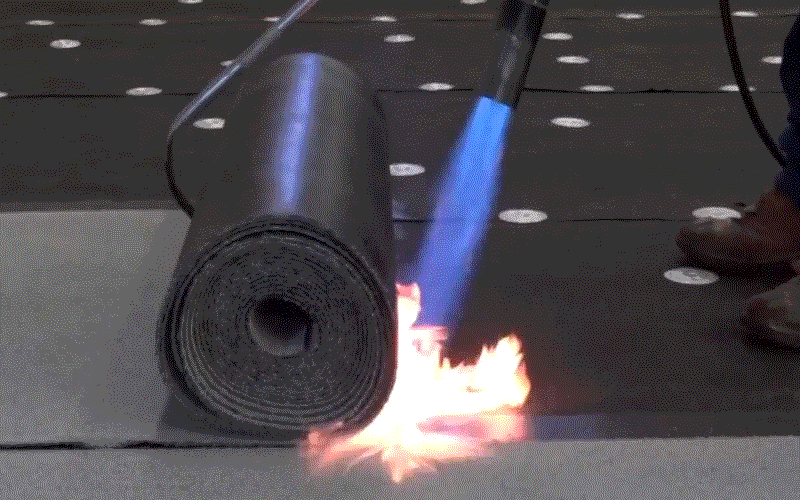
Torch Down Roof Repair Denver, CO
Not every torch down roof needs replacement. Some roofs can be repaired if the membrane is still sound and the damage is limited. The key is knowing where the water is entering and why the failure happened.
Torch down roof repairs may include seam repair, flashing correction, edge repair, patching damaged membrane, improving drainage, sealing problem areas, or replacing isolated sections. The repair has to bond correctly with the existing roof. That means surface prep matters. A dirty, wet, loose, or deteriorated area will not hold a repair the way it should.
We do not recommend homeowners try torch applied roof repair on their own. This is not like cleaning gutters or replacing a downspout. Open flame roofing work can be dangerous and can damage the building if handled incorrectly. Flat roof repair is contractor work. There is a reason old roofers still have eyebrows they protect like family heirlooms.
Torch Down Roof Replacement Denver, CO
Replacement is usually the right answer when the roof has widespread seam failure, heavy cracking, repeated leaks, trapped moisture, bad decking, poor installation, or too many old repairs. A new torch down roof gives the building a fresh waterproofing system instead of another temporary patch.
A proper replacement starts with evaluating the existing roof. In some cases, old material must be removed. In other cases, the roof assembly needs deck repair or drainage correction before new membrane goes down. This is where experience matters. If the base is bad, the new roof is already in trouble before the first roll is finished.
Our replacement process focuses on:
- Removing failed roof material when needed
- Checking the roof deck
- Correcting soft spots
- Reviewing drainage
- Installing proper base layers
- Sealing seams correctly
- Handling edges and transitions carefully
- Protecting walls, vents, pipes, and penetrations
- Cleaning the job area
- Explaining what was done before we leave
That is how a flat roof should be handled. Not rushed. Not guessed. Not treated like a parking lot with shingles on it.

Commercial Torch Down Roofing Denver, CO
Commercial flat roofs need strong attention because they often protect more than one room. They protect inventory, tenants, equipment, offices, electrical systems, mechanical systems, and daily business operations. A leak on a commercial roof can interrupt work fast.
Torch down roofing can be a strong option for smaller commercial flat roofs, additions, roof sections, and low slope areas where a sealed membrane roof is needed. The same rule applies on commercial buildings as on homes: drainage, seams, flashing, and penetrations are everything.
We help Denver property owners understand whether repair or replacement makes more sense. Sometimes the best move is a targeted repair. Sometimes the existing roof is too tired to keep fighting. When a roof is done, it is done. You can argue with it, but roofs are stubborn old things.
Hail Damage On Torch Down Roofs
Denver hail can damage flat roof systems in ways that are not always obvious from the ground. Hail can bruise the membrane, weaken the surface, damage flashing, knock loose older repairs, and create impact points that become leaks later.
After a hail storm, the roof should be checked before the next weather cycle has a chance to make things worse. A torch down roof may not show damage the same way asphalt shingles do. You may not see missing pieces from the yard. The damage can be on the surface, at seams, around drains, or near roof penetrations.
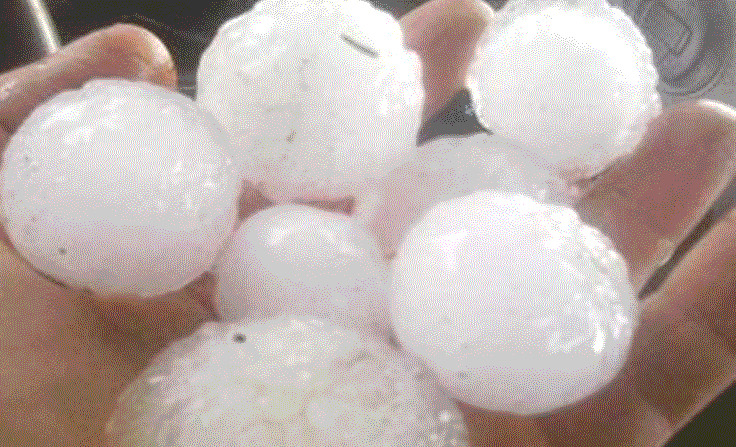
Signs that your flat roof may need a hail inspection include:
- New ceiling stains
- Water around roof drains
- Loose roof material
- Damaged flashing
- Membrane dents or bruises
- Cracks near older seams
- Interior moisture after storms
- Granule loss or surface wear
If your neighborhood had hail, do not assume your flat roof is fine because you cannot see damage from the driveway. Flat roofs hide problems better than they should.
Why Choose Ernie’s Roofing
Ernie’s Roofing is a Denver roofing contractor with roots going back to 1978. We are not here to make flat roofing sound fancy. We are here to make sure the roof protects the home or building.
Our approach is simple. Inspect the roof. Explain the problem. Show the options. Repair what can honestly be repaired. Replace what has reached the end of its service life. Keep the homeowner informed. Clean up the job. Stand behind the work.
Denver homeowners and business owners call us because we understand local roofing problems. We know what hail does. We know what ponding water does. We know what bad seams do. We know what freeze cycles do. We also know that most homeowners do not want a roofing lecture. They want a clear answer from someone who has been on enough roofs to know what he is looking at.
When To Call For Torch Down Roof Service
Call for service when you see water stains, soft spots, ponding water, open seams, cracked membrane, roof edge damage, hail damage, or repeated leaks. Also call if you are buying a property with a flat roof and want to know what you are walking into before signing paperwork.
Flat roof problems rarely get cheaper with time. Water moves quietly until it does not. By the time the ceiling shows a stain, the roof may have been leaking longer than you think. Early inspection is always better than emergency cleanup.
Schedule A Torch Down Roof Inspection Denver, CO
If your flat roof is leaking, aging, ponding water, showing hail damage, or patched more times than it should be, call Ernie’s Roofing. We will inspect the roof, explain what is going on, and give you a clear repair or replacement path.
Family owned since 1978. Denver roofing done straight.
Torch Down Roof Denver, CO FAQs
What is a torch down roof?
A torch down roof is a modified bitumen roof system that is heat applied to create a sealed surface. It is commonly used on flat and low slope roofs where shingles are not the right choice.
Is torch down roofing good for Denver?
Yes, torch down roofing can work well in Denver when it is installed correctly. The roof must have proper seams, flashing, edge details, and drainage to handle hail, sun, snow, and freeze cycles.
Can torch down roofing be used on a house?
Yes. Torch down roofing is often used on flat or low slope residential areas such as additions, porches, garages, patios, and certain flat roof homes.
Can you put shingles on a flat roof?
Usually no. Shingles need enough slope to shed water properly. On flat or very low slope roofs, water can work under shingles and cause leaks.
How do I know if my torch down roof is leaking?
Watch for ceiling stains, soft spots, musty smells, bubbling paint, ponding water, open seams, cracked membrane, or water showing up after snow melt or rain.
Can a torch down roof be repaired?
Yes, if the damage is limited and the existing membrane is still in decent condition. If the roof has widespread failure, replacement may be the better choice.
Does hail damage torch down roofing?
Yes. Hail can bruise the membrane, damage seams, loosen old repairs, and create weak spots that may leak later.
Is torch down roofing safe to install?
It must be installed by trained roofing professionals because heat application and open flame work can be dangerous when handled incorrectly.
How long does a torch down roof last?
Service life depends on installation quality, drainage, roof exposure, maintenance, storm damage, and the condition of the roof deck underneath.
When should I replace my torch down roof?
Replacement should be considered when the roof has repeated leaks, major cracking, failed seams, trapped moisture, soft decking, severe hail damage, or too many old patches.
Protection starts at the top of the home.
OUR SERVICES
Your Neighborhood Roofing Contractor
Get more information concerning our service, do not wait to call us at 720 346 ROOF today. We’ll be more than happy to schedule a meeting with you.

Residential Roofing Contractor
Ernie’s Roofing specialize in residential roofing in Denver and have a team of experienced professional Roofers available to help you get the job done right The First Time. From minor repairs and maintenance to full–scale roof replacements,

Commercial Roofing
We construct, repair, as well as maintain Commercial Roofing systems for services both large and also small, creating personalized services that conserve our client’s time, cash, and also power. Call us at 720 346 ROOF and book a consultation today.

Hail Damage
Their knowledgeable staff is ready to help you assess the damage caused by storms and provide you with a comprehensive repair evaluation & plan. We specialize in all types of roof damage, including hail, wind, and even lightning strikes. Hail Claim Help

INSURANCE CLAIMS HELP
Our team of experienced insurance claim specialists will work with you to ensure that the insurance claim process is as stress-free as possible. We will work with your insurance company to provide all necessary documentation and estimates to ensure that your claim is processed quickly and correctly.

Wind Damage
When it comes to roof damage, it can be difficult to determine whether the damage was caused by hail or wind. While both types of damage can cause similar symptoms, they have different causes and require different repair methods.

Built-Up Roof (BUR) also known as the “Hot-Tar-and-Gravel” Roof System · Roof System · *2 Ply Modified Bitumen Torch Down · Rubber Roof Systems
– Flat Roof Terms


What is Torchdown Roof
TorchDown Roof System
1 Ply Modified Bitumen (BUR) also known as the “Hot-Tar-and-Gravel” Roof System is one of the most popular and cost-effective types of roofing systems in Denver, Colorado. It is a two-ply system with a modified bitumen membrane applied in layers with a torch. This system has been used for decades and is recognized for its durability and low-maintenance requirements. It is also known for its long-term performance, making it a cost-effective option for many homeowners. Read More>